Alicante
Santa Bárbara Castle Heritage · Islamic period to 18th century BIC
A fortress crowning Mount Benacantil, a 166-metre rocky mass rising above the sea. Islamic in origin, it was enlarged over the centuries, with a major remodelling under Philip II. It is laid out in three stepped enclosures, from the oldest core at La Torreta to the 18th-century ravelin, and houses the City Museum (MUSA).
View details →2–3 hours Alicante
Explanada de España Sea and coast · Towns and villages · 1959 A seafront promenade over half a kilometre long, lined with rows of palm trees facing the port. It began in the 19th century as the Paseo de Olade and took its current name and appearance in 1959, when it was paved with a mosaic of red, cream and black marble tracing the waves of the Mediterranean. It is the city's great meeting place and promenade.
View details →30 minutes–1 hour Alicante
Santa Cruz quarter Towns and villages Alicante's oldest quarter, perched on the slopes of Mount Benacantil beneath the castle. Its steep lanes and stairways are lined with low whitewashed houses, painted in colours and covered in flowerpots. It centres on the Santa Cruz hermitage and hosts one of the most distinctive processions of Alicante's Holy Week.
View details →1 hour Alicante
Postiguet Beach Sea and coast An urban beach of golden sand at the foot of Mount Benacantil, between the port and the Raval Roig district. It is Alicante's most central beach, with Santa Bárbara Castle as a backdrop and the seafront promenade behind it. It offers full facilities and is usually very busy in summer.
View details →Half a day Alicante
Alicante Central Market Towns and villages · 1922 A food market opened in 1922 on Avenida Alfonso el Sabio, designed by Francisco Fajardo and completed by Juan Vidal. The brick building with its metal structure blends eclectic and modernista styles, with a rotunda crowned by a dome. It brings together almost 300 stalls selling fish, meat, charcuterie and market-garden produce.
View details →1 hour Alicante
MARQ Archaeological Museum Heritage The archaeological museum of the Provincial Council of Alicante, founded in 1932 and now housed in the former San Juan de Dios hospital. It traces the province's history from Prehistory to the Early Modern period in multimedia galleries and stages major temporary exhibitions. It also manages sites such as Tossal de Manises and La Illeta dels Banyets.
View details →2 hours Alicante
Port of Alicante Sea and coast A commercial port and marina at the foot of Mount Benacantil, opening onto the city via the Explanada. Its marina, with hundreds of berths, is packed with restaurants, terraces and nightlife, and the quays offer waterside strolls with the castle in the background. Boats leave from here for Tabarca, and it is home to The Ocean Race museum.
View details →1–2 hours Alicante
Tabarca Island Sea and coast · 18th century ● Marine Nature Reserve
A small island off Santa Pola, the only inhabited island in the Comunitat Valenciana. Charles III fortified it between 1766 and 1775 to house families of Genoese origin rescued from Algiers, which explains its name of Nueva Tabarca. It retains its walls, gates and grid layout, and its seabed forms Spain's first marine reserve.
View details →Half a day or a full day Santa Pola Alicante
Santa Pola Salt Flats Natural Park Nature and water ● Natural Park
A coastal wetland born of the old salt pans worked since the early 20th century, where salt production coexists with wildlife. Its pools host colonies of flamingos, avocets and black-winged stilts, as well as the fartet, a small endemic fish. It is protected as a natural park and as a Ramsar wetland of international importance.
View details →1–3 hours Elche Alicante
Palm Grove of Elche (El Palmeral) Nature and water · Al-Andalus period ◆ UNESCO World Heritage
A network of date-palm orchards that surrounds and runs through the city of Elche. Its first plantations date back to Antiquity, but the system of orchards and irrigation channels that survives today took shape in the Al-Andalus period. It is the largest palm grove in Europe and a living example of traditional agriculture in an urban setting.
View details →Half a day Elche Alicante
Huerto del Cura Nature and water ◆ UNESCO World Heritage
A historic orchard in the Palm Grove of Elche turned botanical garden, with nearly a thousand palms across some 13,000 m². It takes its name from the chaplain José Castaño, its owner until 1918. It combines date palms with cacti, ponds, sculptures and traditional fruit trees, and its most famous specimen is the Imperial Palm.
View details →1 hour Guadalest Alicante
Guadalest Castle Heritage · 11th century (Islamic period) ★ Most Beautiful Villages BIC
An 11th-century castle of Islamic origin built on a crag at almost 600 metres, overlooking the valley and the Guadalest reservoir. It suffered the earthquakes of 1644 and was blown up in 1708, during the War of the Spanish Succession. The upper enclosure is reached through a tunnel carved into the rock, and the visit includes Casa Orduña.
View details →1–2 hours Altea Alicante
Altea Old Town Towns and villages Altea's historic core, set on a hill facing the sea, preserves its layout of narrow, steep streets with whitewashed houses and flowers. It culminates in Plaza de la Iglesia, presided over by the church of Nuestra Señora del Consuelo, whose blue-tiled dome is the town's best-known image. Two gates from its old wall survive.
View details →1–2 hours Altea Alicante
Mirador de los Cronistas viewpoint Sea and coast A panoramic balcony at the top of Altea's old town, near the church. From its railing the view takes in Altea Bay, the Serra Gelada and much of the coastline. It is a brief but essential stop on a stroll through the town, above all for the views of the coast over the white rooftops.
View details →15–30 minutes Callosa d'en Sarrià Alicante
Fonts d’Algar Nature and water A natural site about 3 km from Callosa d'en Sarrià where the Algar River forms waterfalls, springs and crystal-clear pools over limestone. A trail of around 1.5 km follows the riverbed past the cascades, with bathing areas and a small arboretum. It is one of the most visited natural spaces in inland Marina Baixa.
View details →Half a day Villajoyosa Alicante
Villajoyosa Old Town Sea and coast · Towns and villages · Medieval and 16th century BIC
The historic centre of La Vila Joiosa, built on the old walls beside the mouth of the Amadorio River. Its houses, painted in bright colours that, according to tradition, helped fishermen recognise their homes from the sea, form the town's most famous image. It includes the 16th-century fortress-church of the Assumption.
View details →1–2 hours Villena Alicante
Atalaya Castle Heritage · 12th century (Almohad) and late medieval BIC
A late-12th-century Almohad castle overlooking Villena from San Cristóbal hill. After the Christian conquest in the 13th century it passed to the Castilian nobility, including Prince Juan Manuel. It has a double walled enclosure and a large keep whose lower floors preserve exceptionally rare Almohad ribbed vaults.
View details →1 hour Biar Alicante
Biar Castle Heritage · Almohad and medieval (12th century) BIC
A fortress of Almohad origin (12th century) set on a hill overlooking Biar and the pass between Castile and Valencia. James I took it in 1245 after a long siege, and it went on to guard the kingdom's southern frontier. It preserves a double walled enclosure, a rock-cut cistern and a keep with a rare Almohad vault.
View details →1–2 hours Sax Alicante
Sax Castle Heritage · Almohad and medieval (12th–14th centuries) BIC
A castle perched on a narrow rocky ridge at about 500 metres above sea level, in the heart of the Alto Vinalopó. It combines a square Almohad rammed-earth tower to the north with a large early-14th-century keep at the south-western end. Its elongated silhouette on the rock is one of the most striking on the Vinalopó castle route.
View details →1 hour Novelda Alicante
Sanctuary of Santa María Magdalena Heritage · 20th century (modernisme) A modernista church begun in 1918 beside La Mola Castle, on a hill near the Vinalopó River. It was designed by Novelda-born engineer José Sala Sala with a clear Gaudí influence, using local stone, river pebbles and ceramics. Dedicated to Novelda's patron saint, it stands out for its organically shaped towers and a unique marble organ.
View details →1 hour (2 hours with the castle) Novelda Alicante
La Mola Castle Heritage · Almohad and medieval (12th–14th centuries) BIC
A fortress on a hill beside the Vinalopó, occupied since the Bronze Age and fortified in the Islamic period. The 12th-century Almohad castle was remodelled in the 14th century under James II of Aragon, when its famous triangular tower was added, a rarity in Spanish military architecture. It forms an ensemble with the neighbouring modernista sanctuary.
View details →1 hour Banyeres de Mariola Alicante
Banyeres de Mariola Castle Heritage · Almohad and medieval (12th–13th centuries) ● Next to a Natural Park BIC
A 12th–13th-century Almohad castle crowning Banyeres at about 830 metres above sea level, on the doorstep of the Serra de Mariola. James I granted it in 1249 to Jaufrido de Loaysa, and centuries later it passed to Bocairent. Restored in the 1970s and 1980s, it retains a parade ground, a cistern and a keep that now houses the Museu Fester.
View details →1–1.5 hours Alcoy Alicante
San Jorge Bridge Heritage · 1925–1931 (Art Deco) A concrete viaduct spanning the Serpis River gorge and linking Alcoy's old town with its expansion district. Begun in 1925 and opened in 1931, it was designed by architect Víctor Eusa and engineers Carmelo Monzón and Vicente Redón. Its lampposts, railings and reliefs make it one of the most representative Art Deco works in the Comunitat.
View details →30 minutes Cocentaina Alicante
Palau Comtal de Cocentaina Heritage · Medieval, with Renaissance and Baroque alterations (13th–17th centuries) A palace built after James I's conquest on the remains of the Muslim period, with a first Christian construction from the second half of the 13th century. The Counts of Cocentaina, of the Corella lineage, turned it into a stately residence, and in the 16th and 17th centuries it received Renaissance and Baroque alterations. Today it houses the municipal museum.
View details →1 hour Dénia Alicante
Dénia Castle Heritage · Islamic and Christian periods (11th–17th centuries) BIC
An 11th-century fortress of Muslim origin, from the time when Dénia was the capital of a taifa kingdom, occupying the hill above the old town. It preserves the Almohad-style Portal de la Vila, towers from various periods such as the Torre Roja and, at the top, the 17th-century Palau del Governador, now a museum space. It is listed as a BIC.
View details →1–1.5 hours València
City of Arts and Sciences Towns and villages · 1998–2009 A cultural and scientific complex built on the final stretch of the old Turia riverbed, designed mainly by Santiago Calatrava, with the Oceanogràfic by Félix Candela. It opened in phases between 1998 and 2009 and comprises the Hemisfèric, the Museu de les Ciències, the Umbracle, the Oceanogràfic, the Palau de les Arts and the Àgora, surrounded by sheets of water.
View details →Half a day (a full day if visiting the museums) València
Plaza de la Virgen Towns and villages · Roman times to the present A square in the historic centre occupying part of the forum of Roman Valentia. It is framed by the Cathedral, with the Apostles' Door where the Water Tribunal meets every Thursday, the Basilica of the Virgen de los Desamparados and the Palau de la Generalitat. At its centre, the Turia Fountain represents the river and its eight irrigation channels.
View details →30 minutes–1 hour València
Serranos Towers Heritage · 14th century (Gothic) A great Gothic gateway in València's Christian wall, built between 1392 and 1398 by master builder Pere Balaguer. Its two polygonal towers flank the main entrance from the north, which also served as a ceremonial gateway. From 1586 until 1887 it was a prison for nobles and knights, and today you can climb to its terraces.
View details →45 minutes–1 hour València
València Central Market Towns and villages · 1914–1928 (modernisme) A covered modernista market designed in 1914 by Alejandro Soler March and Francesc Guàrdia, and completed and opened by Enrique Viedma in 1928. Its iron structure, glazed domes and ceramic decoration cover more than 8,000 m², and it still operates daily as a great larder of fresh Valencian produce.
View details →1 hour València
Silk Exchange (La Lonja) Heritage · 15th century (civil Gothic) ◆ UNESCO World Heritage
A civil Gothic building begun in 1482 under master builder Pere Compte as the seat of the silk and oil trade. It comprises a tower, the Consulate of the Sea hall, the Orange Tree Courtyard and the hall of spiral columns, its most celebrated space. It is one of the finest examples of Mediterranean civil Gothic.
View details →45 minutes–1 hour València
Turia Gardens Nature and water · 1980s (after the 1957 flood) A linear park more than nine kilometres long created in the old bed of the Turia, which was diverted south of the city after the 1957 flood. It stretches from Parque de Cabecera to the City of Arts and Sciences and is crossed by 18 bridges, from the Gothic Trinidad bridge to those by Calatrava. It is València's great green axis for walking, running or cycling.
View details →1–3 hours València
Albufera of València Nature and water ● Natural Park
A protected area south of València surrounding a large freshwater coastal lagoon, alongside rice fields, marshes and the Devesa, a strip of dunes with pine woods. Declared a natural park in 1986, it is vital for waterbirds and for rice growing. Traditional boats, barraca cottages and paddy fields are part of its landscape.
View details →Half a day València
El Palmar Towns and villages · Tradition dating from the 13th century ● Natural Park
A small hamlet of València on a former island in the Albufera, surrounded by canals and rice fields about 20 km from the city. Its fishermen settled here as early as the time of James I and still keep the traditional allocation of fishing spots. It is considered the birthplace of paella and preserves barraca cottages such as the 18th-century Barraca del Tío Aranda.
View details →Half a day València
Malvarrosa Beach Sea and coast An urban beach of fine sand one kilometre long and about 135 metres wide on average, north of València's port, between Las Arenas and La Patacona. Its name recalls the rose-geranium (malva-rosa) plantations used for perfume in the 19th century, and it was the summer retreat of Blasco Ibáñez, whose house-museum stands beside the promenade.
View details →Half a day València
Marina de València Sea and coast · 20th–21st centuries The former inner harbour of València's port, converted into a public space of nearly one million square metres. Its transformation began with the 2007 America's Cup sailing race, which left behind the Veles e Vents building, and it combines port sheds decorated with ceramics, the Clock Building and more than 800 berths.
View details →1–2 hours València
El Carmen quarter Towns and villages · Islamic and medieval periods A Ciutat Vella neighbourhood that grew within València's Islamic and Christian walls. It preserves two great Gothic gateways of the Christian wall, the Serranos Towers (14th century) and the Quart Towers (15th century), and blends medieval streets with street art, the IVAM and the Centre del Carme.
View details →2–3 hours València
Palau de la Música Towns and villages · 1987 A concert hall designed by José María García de Paredes and opened in 1987 in the old Turia riverbed. Its great glazed vault opens onto the gardens, and the symphony hall, with almost 1,800 seats, is renowned for its acoustics; it is home to the Orquestra de València.
View details →1–2 hours (or the length of the concert) Sagunto València
Sagunto Castle Heritage · Iberian, Roman, Islamic and modern BIC
A fortress stretching almost a kilometre along the crest of the hill above Sagunto, on the site of the Iberian city of Arse and Roman Saguntum. It is divided into seven squares or enclosures with Iberian, Roman and Islamic remains and later military alterations, and houses an epigraphic antiquarium.
View details →2–3 hours Sagunto València
Roman Theatre of Sagunto Heritage · 1st century AD A Roman theatre built around the mid-1st century, set into the slope of the castle hill. Declared a National Monument in 1896, it underwent a controversial intervention by Giorgio Grassi and Manuel Portaceli between 1990 and 1994 that rebuilt the seating and stage, and it now hosts the Sagunt a Escena festival.
View details →45 minutes–1 hour Xàtiva València
Xàtiva Castle Heritage · Iberian, Roman, Islamic and medieval BIC
A double fortress crowning the ridge above Xàtiva, made up of the Lesser Castle, the oldest part, built on Iberian and Roman remains, and the medieval Greater Castle. After James I's conquest it was a key stronghold between Castile and the Kingdom of València and served as a state prison.
View details →2–3 hours Cullera València
Cullera Castle Heritage · 10th century BIC
A fortress of Islamic origin built in the 10th century, during the Caliphate of Córdoba, on Cullera mountain. At the end of the 19th century the sanctuary of the Virgen del Castillo was built within its walls, and since 1997 it has housed the town's Museum of History and Archaeology.
View details →1–2 hours Chulilla València
Hanging Bridges Trail Trails · 1950s (path); 2013 (bridges) A circular trail of about 10 km through the Turia gorges, following the path Chulilla's villagers once took to build the Loriguilla reservoir in the 1950s. It crosses the canyon on two wooden suspension bridges, rebuilt in 2013, between rock walls more than 80 metres high.
View details →3 hours Chulilla València
Charco Azul Nature and water A pool of turquoise water on the Turia beneath the limestone walls of the Chulilla canyon, formed by an old weir across the riverbed. It is reached via the SL-CV72 trail, which leaves the village, passes Peña Judía and links up with the hanging bridges route.
View details →1.5–2 hours Chelva València
Chelva Water Route Trails · Islamic and medieval periods A circular route of about 8 km that starts in Chelva's historic centre and winds through its quarters of Andalusi, Jewish and Christian origin before following the Tuéjar river. Along the way are the Olinches tunnel, carved into the rock, the old Fábrica de la Luz power station and the La Playeta bathing area.
View details →3 hours Chelva València
La Playeta Nature and water A natural bathing spot on the Tuéjar river, known locally as the Chelva river, with small waterfalls and pools surrounded by riverside vegetation. It is part of the Water Route and lies close to the Olinches tunnel, so a swim can be combined with the heritage walk.
View details →Half a day Montanejos Castellón
Fuente de los Baños Nature and water A stretch of the Mijares river in Montanejos where a thermal spring keeps the water at around 25 °C all year round. The pools open out between limestone walls some 15 metres high, beside a riverside promenade that leads to several local trails.
View details →Half a day Anna València
Lake Anna Nature and water Anna's lake is fed by several springs rising from its bed, used since Muslim times to irrigate the surrounding farmland. Today it is a leisure spot with a bathing area, rowing boats and restaurants, next to the town's large cypress maze.
View details →Half a day Anna València
Gorgo de la Escalera Nature and water A beauty spot on the Sellent river in Anna, in the Canal de Navarrés, where the water has carved a canyon with crystal-clear pools and a main waterfall known as El Salto. It is reached down a flight of 136 steps, which gives the place its name, and forms part of the Three Waterfalls route.
View details →2–3 hours Navajas Castellón
Salto de la Novia waterfall Nature and water A waterfall on the Palancia river in Navajas that tumbles down a moss-covered tufa wall into a pool. Its name, the Bride's Leap, comes from a local legend about a bride who fell into the river while trying to jump across it before her wedding, her veil evoking the falling water.
View details →1–2 hours Gestalgar València
El Motor de Gestalgar Nature and water A stretch of the Turia near Gestalgar named after an old circular pumping house from the mid-20th century. It was the village's most popular river bathing spot, with shady banks and trails towards Chulilla, but the 2024 DANA floods altered the riverbed and swimming is now discouraged.
View details →Half a day Sot de Chera València
Las Toscas Nature and water ● Natural Park
The source of the Sot, or Reatillo, river within the Chera-Sot de Chera Natural Park, where the water cascades down a series of tufa formations. It has a cave with two entrances and is recognised as an EU priority habitat for its geology and vegetation.
View details →1–2 hours Alzira València
La Murta Nature and water · 15th–18th centuries A valley in the Serra de Corbera protected as a Municipal Natural Site together with La Casella. It holds the ruins of the Hieronymite monastery of Santa María de la Murta, inhabited from 1401 and abandoned after the disentailment of 1835, surrounded by Mediterranean woodland of ash, strawberry trees and the myrtle (murta) that gives the place its name.
View details →Half a day Alzira València
La Casella Nature and water The valley next to La Murta in the Serra de Corbera, part of the same Municipal Natural Site of Alzira. The old shepherds' lambing pens have been restored as a visitor centre, from which easy trails set off among springs, pine woods and Mediterranean scrub, very popular with families.
View details →2–3 hours Buñol València
Buñol Castle Heritage · 11th–16th centuries BIC
A fortress of Muslim origin built around the 11th–12th centuries, which after the Christian conquest guarded the border between Castile and Valencia. It has two enclosures linked by a bridge over the moat and dominated by the Torre Mayor; houses were built inside from the 19th century onwards, so it is still inhabited.
View details →1 hour Requena València
Old Town and Cuevas de la Villa Towns and villages · Islamic and medieval periods The Villa quarter is Requena's medieval core, set on a promontory with a castle, walls and Gothic churches such as El Salvador and San Nicolás. Beneath its houses lies a network of caves dug in Muslim times and used until the 17th century as silos, wine cellars, a public granary and an ossuary.
View details →2–3 hours Gandia València
Palau Ducal dels Borja Heritage · 14th–17th centuries A Gothic palace begun in the 14th century by Alfonso of Aragon the Elder and enlarged by the Borja family, who bought the duchy of Gandia in 1485. Saint Francis Borgia was born here. Since 1890 it has belonged to the Society of Jesus, which restored it and added a neo-Gothic chapel.
View details →1–1.5 hours Peñíscola Castellón
Papa Luna Castle Heritage · 1294–1307 ★ Most Beautiful Villages BIC
A fortress built by the Knights Templar between 1294 and 1307 over Muslim remains at the top of the rock. In the 15th century it was the residence of Pope Benedict XIII, the Papa Luna, who died here in 1423, which briefly made Peñíscola a papal seat. It has served as a setting for films and TV series.
View details →1–2 hours Peñíscola Castellón
Peñíscola Old Town Towns and villages · Medieval and Renaissance ★ Most Beautiful Villages
A citadel on a rock joined to the mainland by a narrow isthmus, with some 510 houses spread across 27 steep, narrow streets. It is protected by medieval and Renaissance walls, the latter designed by Antonelli in the reign of Philip II, which climb up to Papa Luna Castle.
View details →2–3 hours Morella Castellón
Morella Castle Heritage · Islamic and medieval periods ★ Most Beautiful Villages BIC
A fortress perched on the Mola de Morella, a crag inhabited since prehistoric times and occupied by Iberians, Romans and Muslims before the Christian conquest in the 13th century. It is laid out on three levels, with the Governor's palace, the artillery batteries and the parade ground, and played a key role in the Carlist Wars.
View details →1–1.5 hours Morella Castellón
Morella City Walls Heritage · 14th century ★ Most Beautiful Villages
A circuit of walls almost two kilometres long that completely encloses Morella's historic centre, at the foot of the castle. Its curtain walls, reinforced with towers and pierced by several gateways, were built mainly in the 14th century and reveal the town as a stronghold of inland Valencia.
View details →1–2 hours Vilafamés Castellón
Vilafamés Castle Heritage · Islamic and medieval periods ★ Most Beautiful Villages BIC
A rock-top castle of Arab origin, wedged among the reddish sandstone crags that crown Vilafamés. James I conquered it in 1233, and in the 19th century, during the Carlist Wars, the round keep was remodelled; today it is its most recognisable silhouette. Much of its walls and moat survive.
View details →1 hour Onda Castellón
Castle of the 300 Towers Heritage · Islamic period (10th–11th centuries) BIC
A fortress of Roman origin greatly enlarged by the Muslims from the 10th century, with four tiered enclosures on the hill overlooking Onda. Its nickname comes from the chronicler Ramon Muntaner, who claimed, with some exaggeration, that it had as many towers as there are days in the year. Inside are the remains of an 11th-century Islamic palace.
View details →1–2 hours Alcalà de Xivert Castellón
Xivert Castle Heritage · Islamic and Templar periods BIC
An Andalusi castle at 431 m above sea level in the Serra d'Irta, which passed to the Templars in 1234 through a peaceful surrender and later to the Order of Montesa. Towers, a cistern and remains of Islamic dwellings survive from the village at its foot, abandoned in the 17th century.
View details →1–2 hours Culla Castellón
Culla Castle Heritage · 13th century ★ Most Beautiful Villages BIC
Remains of a castle of Arab origin with three enclosures fitted to the hilltop, at about 1,060 m above sea level. The town was the Templars' most expensive purchase, acquired in 1303. The castle fell into ruin after the Carlist Wars but remains a superb viewpoint over the Alt Maestrat.
View details →1 hour Ares del Maestrat Castellón
Ares del Maestrat Old Town Towns and villages · Islamic and medieval periods A stone village at more than 1,200 m above sea level, at the foot of the Mola d'Ares, a limestone mesa crowned by a castle with Arab walls and Iberian remains. According to tradition, it was the first place in the Kingdom of Valencia conquered by James I. Within its municipality lies the Cova Remigia, with Levantine rock art.
View details →Half a day Montanejos Castellón
Los Estrechos del Mijares Trail Nature and water · Trails A local circular trail through Los Estrechos, a stretch of the Mijares river about 2.5 km from Montanejos on the way to the Arenós reservoir. Here the river runs through a canyon about 25 m wide between near-vertical limestone walls, much loved by climbers and canyoning enthusiasts.
View details →3–4 hours Montanejos Castellón
Cueva Negra Nature and water · Neolithic A large natural cave about 800 m from Montanejos, beside the Puebla de Arenoso road and the Mijares river. Beyond an entrance measuring 26 x 10 m opens a chamber of some 2,300 m², formed by the collapse of huge rock blocks, where traces of Neolithic occupation have been found.
View details →1 hour Segorbe Castellón
La Esperanza Spring Nature and water · 15th century A crystal-clear spring in the La Esperanza Municipal Natural Site, in the Alto Palancia, surrounded by palm trees and shaped like a large pond. Since the Middle Ages its flow has been shared between Segorbe, Altura and Navajas. Above it stand the Esperanza hermitage and the ruins of a 15th-century Hieronymite monastery.
View details →1–2 hours Segorbe Castellón
Segorbe Cathedral-Basilica Heritage · 13th–18th centuries Seat of the diocese of Segorbe-Castellón, built in the Gothic style from the 13th century and consecrated in 1534. Between 1791 and 1795 Vicente Gascó gave it its current Neoclassical appearance. It retains a trapezoidal Gothic cloister whose upper floor houses the Cathedral Museum, with Valencian painting from the 14th to the 16th centuries.
View details →1–1.5 hours Segorbe Castellón
Segorbe Aqueduct and City Walls Heritage · Islamic period and 14th century The defensive and hydraulic ensemble of Segorbe's historic centre. The aqueduct, of Islamic origin (11th–12th centuries), carried water from the Fuente de la Esperanza and features 14th-century pointed arches. Beside the old Teruel gateway rise the cylindrical Prison and Executioner's towers, both 14th-century with rib vaults.
View details →1 hour Vall d’Uixó Castellón
San José Caves Nature and water · Palaeolithic (human occupation) A karst cave carved by an underground river about 2,750 m long, of which 800 m can be visited, mostly by boat. The journey passes chambers and lakes such as the Lago Azul and the Sala de los Murciélagos, and Palaeolithic remains and rock paintings have been found in the cave. The temperature stays steady at around 20 °C.
View details →40 minutes–1 hour Benicàssim Castellón
Old Monastery of the Desierto de las Palmas Heritage · Nature and water · 1697–1783 ● Natural Park
Ruins of the first Discalced Carmelite convent in the Desierto de las Palmas, built between 1697 and 1733 on a flat stretch between ravines, with room for 24 friars. The torrential rains and landslides of 1783 damaged the building and forced its abandonment; the new monastery was built about 500 m away between 1784 and 1791.
View details →1–2 hours Benicàssim Castellón
Vía Verde del Mar greenway Sea and coast · Trails A 6.5 km route along the old coastal railway line between Benicàssim and Oropesa del Mar, abandoned when the track was moved inland. It runs past cliffs and coves, passes the Cordà and Colomera watchtowers and goes through a lit tunnel of about 600 m under Monte Bovalar. It is flat and suitable for bikes and wheelchairs.
View details →1.5–2 hours on foot (one way) Oropesa del Mar Castellón
Oropesa Old Town and Castle Heritage · Towns and villages · Islamic and medieval periods BIC
Oropesa's historic centre occupies a hill above the coast, crowned by a castle of Islamic origin. The fortress was taken by El Cid in 1090 and by James I in 1233, and had a rectangular plan with six fan-shaped towers and a large keep. It was badly damaged in Marshal Suchet's siege in the 19th century; its remains and walls survive today.
View details →1 hour Oropesa del Mar Castellón
Torre del Rey Sea and coast · 15th–16th centuries A coastal defence tower begun in 1413 on the orders of Ferdinand of Antequera to protect the coast from Barbary raids. In 1534 Juan de Cervellón reinforced it with walls up to 4 m thick, and in 1568 Philip II acquired it, hence its name, the King's Tower. Today it houses the Oropesa museum and hosts exhibitions and cultural events.
View details →30–45 minutes Castelló de la Plana Castellón
El Grao and Pinar del Grau Sea and coast Castelló's seafront district, which grew up around the fishing and commercial port. North of the port stretches the Pinar, a park of about 2 km of Aleppo pines with restored dunes, walkways and sports areas, beside the 1,750 m Blue Flag Pinar beach. Since 1988 it has hosted an annual Harley-Davidson rally.
View details →Half a day Castelló de la Plana Castellón
Co-Cathedral of Santa María Heritage · 15th century (rebuilt from 1939) Castelló's main church, rebuilt in Gothic style in the 15th century after the original church burned down. Almost destroyed in 1936, it was rebuilt from 1939, preserving the Gothic portals and some original features. It holds paintings by Ribalta and sculptures by Vergara, and opposite it stands the freestanding Fadrí, an octagonal 16th-century bell tower.
View details →30–45 minutes Alcossebre Castellón
Serra d’Irta Natural Park Nature and water · Sea and coast ● Natural Park
A protected area declared in 2002, covering some 7,744 ha between Peñíscola, Santa Magdalena de Polpís and Alcalà de Xivert-Alcossebre. Its ridge runs parallel to the sea and reaches 572 m at Campanilles, while its coastline of about 12 km alternates cliffs and undeveloped coves. It includes a marine reserve offshore.
View details →Half a day or a full day Alcossebre Castellón
Hermitage of Santa Lucía and San Benito Heritage · 17th century A 17th-century Baroque hermitage built over a 16th-century watchtower on Sant Benet hill, at about 312 m above sea level. On its slope is an archaeological site with Bronze Age, Iberian and Islamic remains, and an interpretation centre beside it displays the finds. The viewpoint takes in the bay of Alcossebre, Penyagolosa and the Columbretes.
View details →1–1.5 hours Jérica Castellón
Torre de la Alcudia Heritage · Islamic base, crowning section from 1622 BIC
Also known as the Torre de las Campanas (Bell Tower), it is the bell tower of Jérica's former parish church. It rises from a stone base of Islamic origin, topped by a late Mudéjar brick section with a strong Aragonese influence, similar to the towers of Teruel. The works, designed by the Carthusian monk Antón Martín, were completed in 1622.
View details →30 minutes Maestrazgo · Teruel Getaway
Mirambel Towns and villages · 13th–17th centuries ★ Most Beautiful Villages
A town in the Teruel Maestrazgo, reconquered around 1169 by Alfonso II and linked to the military orders. It preserves almost all of its 13th-century wall, with five gateways, four towers and the castle-palace. The Portal de las Monjas, joined to the 16th-century Augustinian convent, stands out for its plaster and wood latticework. Pío Baroja portrayed it in «La venta de Mirambel».
View details →Half a day No destinations match those filters. Try another search.

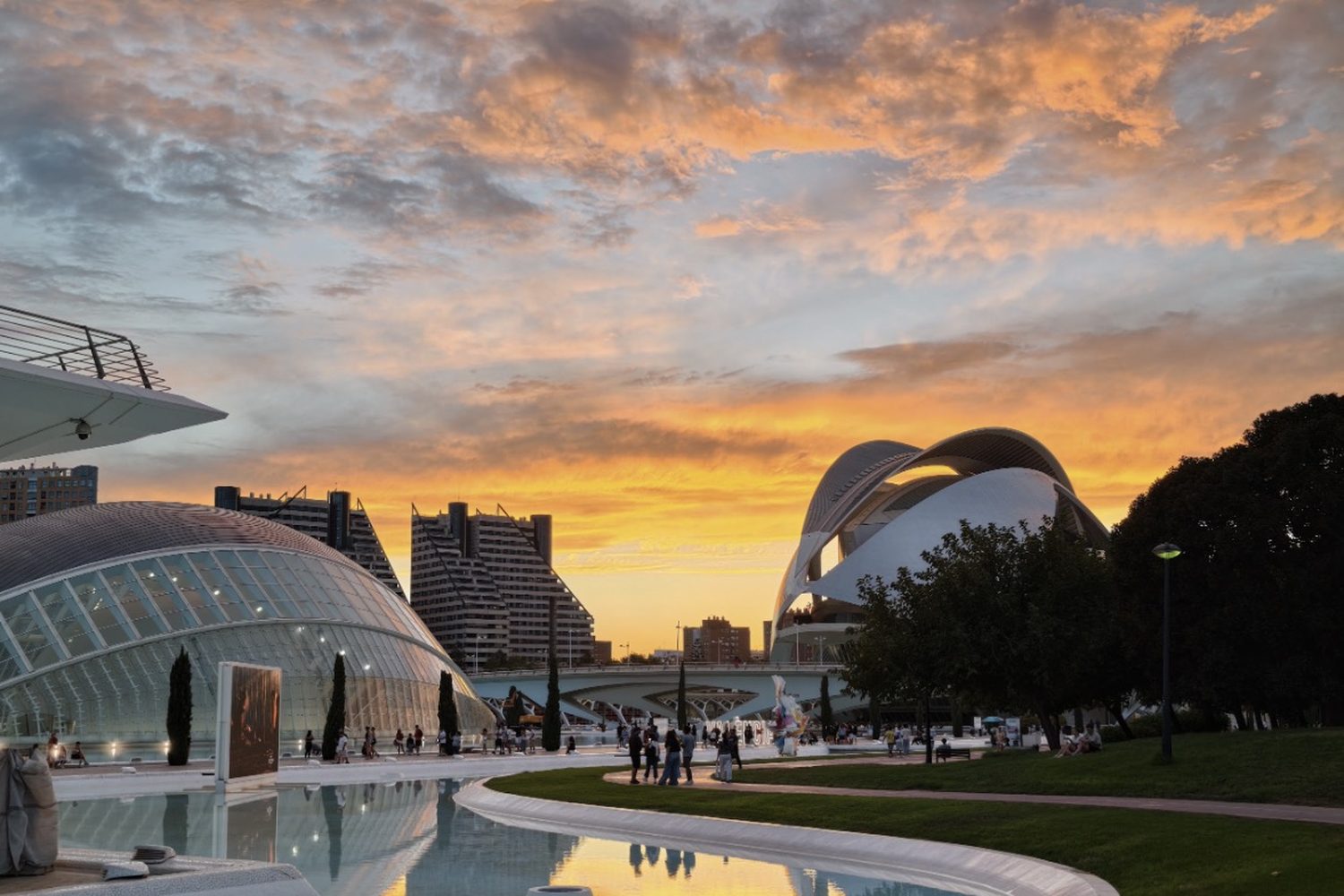 Photo · gourmetMAPS